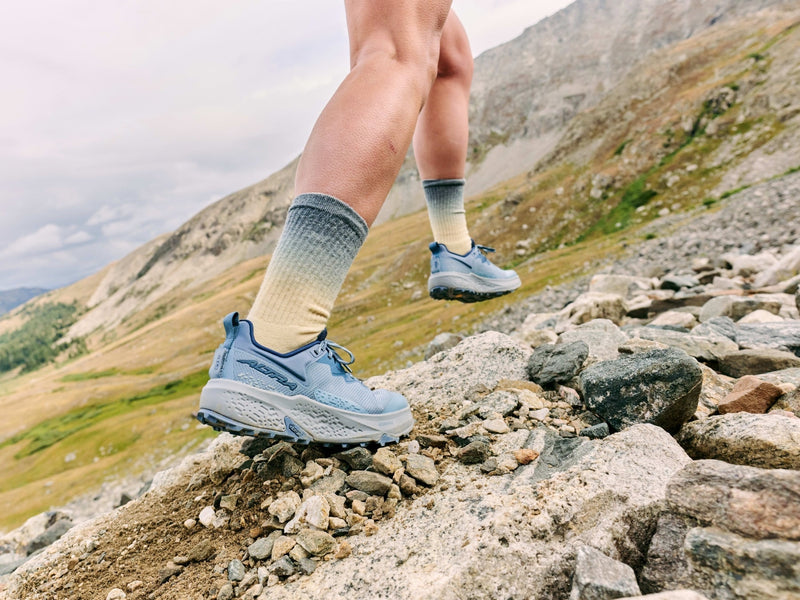


- Tag: Shoe Guides
What's the Difference Between Road and Trail Running Shoes?
You might be wondering if you really need a different pair of shoes to run on the trails instead of the roads. The truth is that you absolutely do. Roads and trails are different running universes as far as your feet, joints, and muscles are concerned, and you’ll need the right equipment for each.
Let’s cover the difference between road and trail running shoes, adapted by Charlie Hope D’Anieri from RIDC’s Opening the Path to Trail Running Toolkit by Allison Torres Burtka.

What to Expect in Road Running Shoes
So, can you use trail running shoes on the road? Well, there are a few things to consider.
First, men’s and women’s road running shoes are built with smooth rubber outsoles. Basically, these are flat bottoms that help you move efficiently over flat, predictable surfaces. Because roads and sidewalks are hard, they push back on the joints in your knees when you stride. For this reason, road running shoes tend to have some extra padding, or cushion, to help absorb the shock.
In general, road running shoes prioritize breathability, lightweight construction, and cushioning, to help you build speed and rhythm in your stride without being weighed down.
Trail Running Shoes vs. Running Shoes for the Road
Trails, on the other hand, are not predictable running surfaces. We’d recommend not bringing road shoes on the trails because one slip can spell disaster. To keep you upright as you navigate everything from leaves and pine needles to mud, wood bridges, planks, slick rocks, and boulders, men’s and women’s trail running shoes put a premium on traction. So when it comes to the outsole, the important word is grip. Look for grooves that bind with dirt, bark, and mud to help you stride with confidence.
Because trails will ask your feet to go up and down slopes, make sudden turns, and take a huge variety of strides, trail shoes are also designed for stability. Built for lateral movement and balance, they’ll be a little heavier on your feet, with more reinforcement in the upper mesh.
In addition, trails are usually soft and responsive running surfaces. So trail running shoes don’t require the same cushioning as road shoes do. They may also have more reinforcements to protect you from rocks and other hazards underfoot.
When to Wear Road vs. Trail Running Shoes
When you’re trying to sort out whether it makes more sense to wear trail shoes or road shoes for your workout, ask yourself: am I liable to slip and slide on this terrain? If the answer is an easy yes, then trail shoes are the way to go.
A jog in the city that’s 95% blacktop is a great workout for road running shoes. But with almost any other terrain, you might lean towards lacing up your trail runners. Even a gravel path is going to have rocks underfoot that your trail shoes are meant to absorb. The more technical the trail, the more necessary it is to have the grippy outsoles and stable construction of trail shoes.
In any rainy, damp, or even dewy weather, your trail shoes are much less likely to slip and slide when compared with your road runners. And when you’re working out, you need to feel confident in your stride. A pair of waterproof running shoes is even better if you anticipate rain, puddles, and river crossings.
What Are the Best Trail and Road Running Shoes for You?
Whether you run roads, trails, or both, Altra makes best-in-class footwear to take on the terrain. In our road and trail shoes, you’ll always find two critical elements: Altra FootShape™ Fits, which give a roomy toe box to spread your feet and let you stride more naturally, and Zero-to-Low Drop cushioning, which rebalances your weight and keeps you better aligned.
What does the difference between road and trail running shoes look like? On the road side of things, our Experience Flow 2 is meant to give you that euphoric runner’s high. Debuting our Altra EGO™ P35 midsole foam, they’re fast, efficient, comfortable, and lightweight.
For Altra trail shoes, it doesn’t get much better than the Lone Peak family. These powerhouses are built for traction, durability, and comfort, with the Lone Peak 9+ models even featuring a Vibram® Megagrip outsole. With zero drop and a supportive midsole, these trail warriors are your tough adventure buddies that never weigh you down.
Comfortable Running Shoes for Women and Men
How do you know when the shoe fits you just right? In a word, it’s all about comfort. And the last mile of every run is when comfort matters most. To know you have the right shoe, make sure that you’re cozy all the way to the finish line. If you get sore or achy in the feet as the miles drag on, you might be better off with high cushion shoes.
Stability is another important fit factor. The most comfortable running shoes for women and men always lace up nice and tight, but you should still feel loose in your stride, and never fall off balance. If you feel disconnected from the ground and have a hard time placing your feet, perhaps low cushion shoes are best for you. You can always make sure that soft midsoles and arch support keep your feet supported for runs fast and slow, short and long.
No matter what, scrunched toes make for uncomfy feet and less-than-ideal alignment and strides. A toe box that allows your digits to fully spread is essential to a comfortable shoe fit.
No Matter What, a Wide Toe Box Makes All the Difference
To find the best trail and road running shoes for you, it’s essential that you try a wide toe box. You’ve probably heard of wide shoes, but this is slightly different.
Here’s the deal. Most running shoes have a narrow toe box that scrunches your toes together. Not only is this less than comfortable, it creates unnecessary friction between your shoes and your feet. And worse, it also disrupts your natural stride. Compromising the true shape of your foot can throw off balance and stability.
Doesn’t sound great, does it? Now you know why so many people swear by The Altra Fit. We only make wide toe box shoes that let your toes splay naturally. So if you’re wearing Altra shoes, you’re moving the way that you were meant to.
While you’re sorting out the difference between road and trail running shoes, one element should never change: a wide toe box that un-cramps your toes to liberate your full, natural stride.